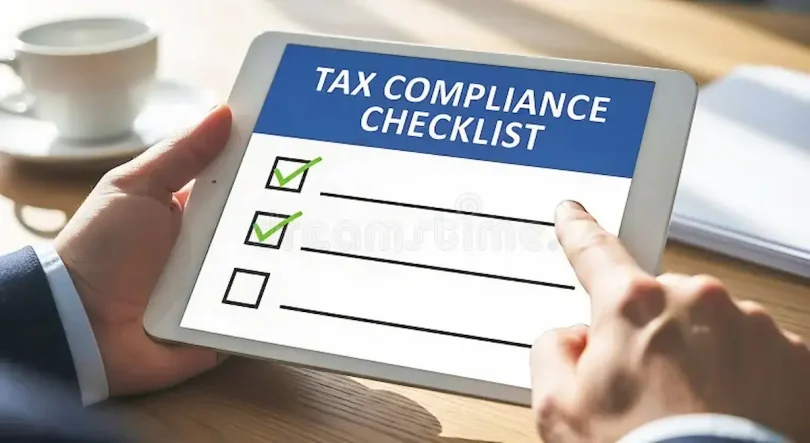

A tax compliance checklist is an essential tool for individuals, freelancers, and businesses to ensure they meet all tax obligations accurately and on time. Tax laws can be complex and frequently updated, making it easy to miss deadlines, overlook deductions, or make costly errors. A structured checklist simplifies the process, reduces stress, and helps maintain full legal compliance.
This detailed guide explains every step of a tax compliance checklist, covering documentation, filing requirements, payment obligations, and long-term record management.
What Is a Tax Compliance Checklist?

A tax compliance checklist is a systematic list of tasks and requirements set by tax authorities that taxpayers must complete during a financial year. It ensures that income is reported correctly, deductions are claimed legally, taxes are paid on time, and proper records are maintained.
It applies to:
- Salaried individuals
- Freelancers and self-employed professionals
- Small and large businesses
Importance of a Tax Compliance Checklist
Using a tax compliance checklist offers several benefits:
- Prevents penalties and legal issues
- Ensures timely tax filing and payments
- Helps claim all eligible deductions and exemptions
- Improves financial organization and transparency
- Reduces the risk of audits and notices
A checklist acts as a safeguard against common mistakes caused by oversight or lack of information.
Tax Compliance Checklist for Individuals

1. Determine Filing Eligibility
- Check if your annual income exceeds the taxable limit
- Confirm residential status and filing category
- Verify if you have multiple income sources requiring disclosure
2. Collect Income-Related Documents
Ensure you have documentation for all income sources:
- Salary slips and employment contracts
- Bank interest and fixed deposit statements
- Rental income records
- Investment income and capital gains reports
3. Identify and Track Tax Deductions
Maintain proof of eligible deductions, including:
- Retirement and pension contributions
- Health and life insurance premiums
- Education or tuition expenses
- Home loan interest and principal repayment
- Charitable donations to registered organizations
4. Calculate Tax Liability
- Apply applicable tax slabs or rates
- Adjust for advance tax or withheld taxes
- Verify if any additional tax is payable or refundable
5. File Income Tax Return
- Use authorized e-filing portals or tax software
- Review entries carefully before submission
- Save acknowledgment receipts and confirmation numbers
You may also like to read this:
Budget and Tax Tools: Plan Finances and Taxes Easily
How to File Taxes Correctly: Step-by-Step Guide
Income Tax Compliance Guide: Rules & Tips for Individuals
Tax Filing Rules Explained: Guide for Individuals & Businesses
Tax Compliance Requirements: Individuals & Businesses
Tax Compliance Checklist for Businesses
1. Tax Registrations
Ensure all required registrations are in place:
- Income tax registration
- GST/VAT or sales tax registration
- Payroll and withholding tax registration
2. Maintain Accurate Accounting Records
- Sales invoices and purchase bills
- Expense and cost documentation
- Payroll records and employee tax deductions
Accurate bookkeeping is critical for compliance and audits.
3. Periodic Tax Filings
- File income tax returns annually
- Submit GST/VAT or sales tax returns monthly or quarterly
- File payroll and withholding tax returns on schedule
4. Tax Payments
- Pay advance or estimated taxes
- Clear self-assessment tax liabilities
- Ensure timely payment of indirect and payroll taxes
5. Reconciliation and Verification
- Match tax returns with financial statements
- Reconcile bank accounts and tax ledgers
- Resolve discrepancies immediately
Record-Keeping Compliance Checklist
- Retain tax returns and payment proofs for 5–7 years
- Store invoices, receipts, and deduction proofs
- Maintain digital backups for easy access
- Preserve audit reports and legal notices
Proper record-keeping is crucial during audits or assessments.
Common Tax Compliance Mistakes to Avoid
- Missing filing or payment deadlines
- Underreporting income or misclassifying earnings
- Claiming deductions without valid documentation
- Poor record management
- Ignoring changes in tax laws and regulations
Avoiding these mistakes ensures smoother compliance and financial security.
Best Practices for Staying Tax Compliant
- Create a tax compliance calendar
- Start tax preparation early in the financial year
- Use accounting or tax software for accuracy
- Review tax obligations regularly
- Seek professional advice for complex filings
Conclusion
A comprehensive tax compliance checklist is vital for maintaining legal compliance, avoiding penalties, and managing taxes efficiently. Whether you are an individual or a business owner, following a detailed checklist ensures accurate reporting, timely filing, and proper record-keeping.
Tax compliance is not just a legal requirement—it is a smart financial practice that protects your income, reputation, and future stability.
Frequently Asked Questions (FAQs) on Tax Compliance Checklist
1. What is a tax compliance checklist?
A tax compliance checklist is a step-by-step list that helps individuals and businesses meet tax filing, payment, and record-keeping requirements accurately and on time.
2. Who should use a tax compliance checklist?
Individuals, freelancers, self-employed professionals, small businesses, and large organizations should use a tax compliance checklist to stay legally compliant.
3. Why is a tax compliance checklist important?
It helps avoid penalties, reduces filing errors, ensures timely tax payments, and supports proper documentation for audits.
4. What documents are included in a tax compliance checklist?
Common documents include income statements, bank records, investment proofs, expense receipts, tax payment challans, and previous tax returns.
5. How often should a tax compliance checklist be reviewed?
A checklist should be reviewed regularly—monthly or quarterly—to track deadlines and ensure all tax obligations are met.