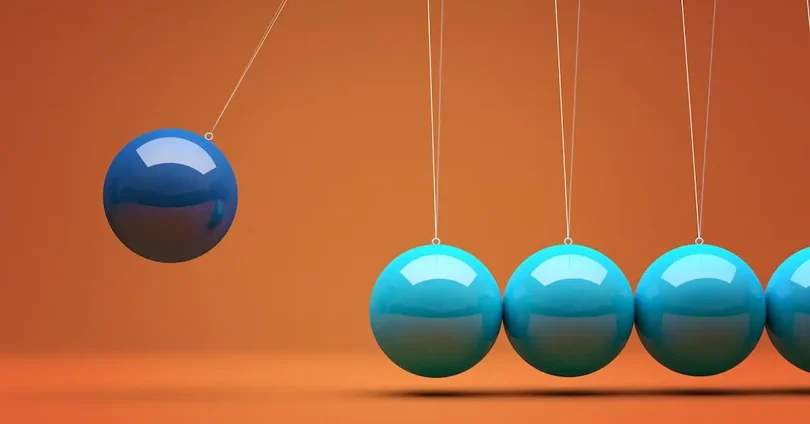

Newton’s third law is one of the most important principles in physics. It explains how objects interact with each other through forces and why movement often involves two objects pushing or pulling on one another. This law is commonly explained by the statement, “For every action, there is an equal and opposite reaction.”
Newton’s third law helps us understand many everyday activities, such as walking, jumping, swimming, and kicking a ball. It also explains how rockets move forward by pushing exhaust gases backward. These examples show that forces always occur in pairs when two objects interact.
In this article, we will explore the meaning of Newton’s third law, its formula, and simple real-life examples. You will also learn how this law works in sports, transportation, and space exploration. By the end, you will have a clearer understanding of this important physics concept.
What Is Newton’s Third Law?
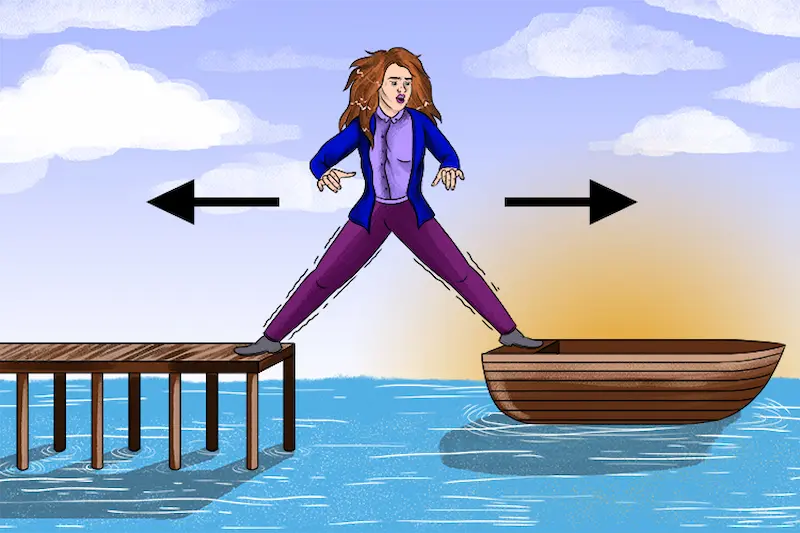
Newton’s third law of motion states that for every action, there is an equal and opposite reaction. This means that when one object applies a force to another object, the second object applies a force of equal strength in the opposite direction to the first object.
person on boxbox on person
Force of person on box and force of box on person are equal in magnitude, opposite in direction, and act on different objects
Contact example
Pushing a boxColliding ballsBox on table
Give feedback
Understanding Newton’s Third Law in Simple Words
Imagine you are pushing a box across the floor. Your hands apply a force to the box, and the box applies an equal force in the opposite direction to your hands. These forces occur at the same time and act on two different objects.
The same principle applies when you walk. Your feet push backward against the ground, and the ground pushes you forward. This forward force helps you move.
What Does Equal and Opposite Mean?
The word equal means both forces have the same magnitude, or strength. The word opposite means they act in opposite directions. These forces do not cancel each other out because they act on different objects.
For example, when a person jumps, their feet push down on the ground, and the ground pushes upward on the person. This upward force helps the person leave the ground.
Why Is Newton’s Third Law Important?
Newton’s third law helps explain how objects move and interact in everyday life. It is useful for understanding walking, swimming, sports, vehicle movement, and rocket propulsion. Learning this law makes it easier to understand how forces work in the world around us.
Newton’s Third Law Formula Explained
Newton’s third law can be expressed using a simple mathematical formula. The formula shows that when one object applies a force to another object, the second object applies an equal force in the opposite direction.
\[ F_{A \text{ on } B}=-F_{B \text{ on } A} \]
What Does the Formula Mean?
- \(F_{A \text{ on } B}\): The force that object A applies to object B.
- \(F_{B \text{ on } A}\): The force that object B applies to object A.
- Negative sign (-): It indicates that the two forces act in opposite directions.
Both forces have the same magnitude, but their directions are opposite. They also occur simultaneously and act on different objects.
Example of Newton’s Third Law Formula
Imagine that a person pushes a box with a force of 20 newtons toward the right. The box pushes back on the person with a force of 20 newtons toward the left.
Using Newton’s third law:
- Force applied by the person on the box = 20 N to the right.
- Force applied by the box on the person = 20 N to the left.
The forces are equal in strength and opposite in direction. However, they act on different objects, so they do not cancel each other out on a single object.
Why Is the Formula Useful?
The formula helps students identify action-reaction force pairs in physics problems. It can be used to understand interactions such as pushing a wall, kicking a ball, swimming, and launching a rocket.
Remember that Newton’s third law describes forces between interacting objects. The movement caused by those forces depends on the mass of each object and the other forces acting on it.
How Does Newton’s Third Law Work?
Newton’s third law works whenever two objects interact with each other. When one object applies a force to another object, the second object applies an equal force in the opposite direction to the first object. These forces happen at the same time and act on different objects.
left ball on rightright ball on left
Force of left ball on right ball and force of right ball on left ball are equal in magnitude, opposite in direction, and act on different objects
Contact example
Pushing a boxColliding ballsBox on table
Give feedback
1. Two Objects Apply Forces to Each Other
Imagine pushing a box with your hands. Your hands apply a force to the box, while the box applies an equal force in the opposite direction to your hands. This interaction is an example of Newton’s third law.
2. Action and Reaction Happen at the Same Time
Action and reaction forces do not happen one after another. They occur simultaneously during the interaction between two objects. For example, when a football player kicks a ball, the foot pushes the ball, and the ball pushes back against the foot at the same time.
3. The Forces Act on Different Objects
One important point is that action and reaction forces do not cancel each other out on a single object. The force applied to the box acts on the box, while the opposite force acts on the person pushing it. Because the forces act on different objects, each object responds to the forces acting on it.
4. Equal Forces Can Cause Different Movements
Although the forces are equal in magnitude, the objects may move differently. For example, when a moving ball collides with a much heavier ball, the lighter ball may experience a much larger change in motion. This happens because an object’s acceleration depends on its mass and the net force acting on it.
5. Newton’s Third Law Works in Everyday Life
This law explains many familiar activities. When you walk, your feet push backward against the ground, and the ground pushes you forward. When a swimmer pushes water backward, the water pushes the swimmer forward. Similarly, a rocket moves forward as it pushes exhaust gases backward.
Understanding Newton’s third law helps explain how forces work during interactions. It is an important principle in physics and has applications in daily life, sports, transportation, and space exploration.
Everyday Examples of Newton’s Third Law
Newton’s third law can be seen in many everyday activities. Whenever two objects interact, they exert forces on each other in opposite directions. Understanding these examples makes it easier to learn how this law works in real life.
1. Walking on the Ground
When you walk, your feet push backward against the ground. In response, the ground pushes your feet forward. This forward force helps you move ahead. Without sufficient friction between your feet and the ground, walking becomes difficult, as often happens on slippery surfaces.
2. Pushing a Wall
When you push a wall with your hands, your hands apply a force to the wall. At the same time, the wall applies an equal force in the opposite direction to your hands. The wall usually does not move because it is supported by the surrounding structure and the forces acting on it are balanced.
3. Swimming in Water
Swimming is another common example of Newton’s third law. A swimmer pushes water backward with their hands and feet. The water then pushes the swimmer forward, allowing them to move through the pool or other body of water.
4. Jumping off the Ground
When you jump, your feet push down against the ground. The ground pushes upward on your body in response. This upward force helps you accelerate off the ground and move into the air.
5. A Balloon Moving Through the Air
When air escapes from an untied balloon, it rushes out in one direction. The escaping air pushes against the surrounding air, while the balloon experiences a force in the opposite direction. As a result, the balloon moves unpredictably until most of the air has escaped.
6. Kicking a Football
When you kick a football, your foot applies a force to the ball, causing it to accelerate. At the same time, the ball applies an equal and opposite force to your foot. The ball’s movement depends on the net force acting on it and its mass.
7. Rowing a Boat
When a person rows a boat, the oars push water backward. The water pushes the oars forward, helping the boat move ahead. This is why rowing requires pushing water in the direction opposite to the boat’s intended movement.
These examples show that Newton’s third law is not limited to science textbooks. It helps explain everyday movement, sports, swimming, and transportation by showing how interacting objects exert forces on each other.
Newton’s Third Law in Sports
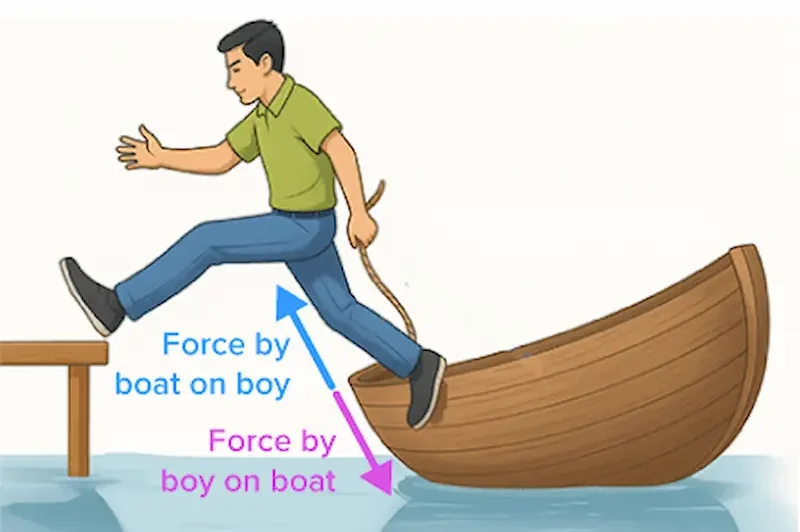
Newton’s third law plays an important role in many sports. Athletes use forces to run, jump, throw, kick, and change direction. Whenever an athlete interacts with the ground, a ball, or another object, action and reaction forces occur.
1. Running and Sprinting
When a runner pushes backward against the ground with their feet, the ground pushes the runner forward. This forward force helps the runner accelerate and move ahead. Strong contact with the ground and good technique can help athletes run more effectively.
2. Kicking a Football
When a football player kicks a ball, the player’s foot applies a force to the ball. At the same time, the ball applies an equal and opposite force to the player’s foot. The force from the foot changes the ball’s motion, sending it toward the goal or another player.
3. Jumping in Basketball
Basketball players use Newton’s third law when jumping to shoot, block a shot, or grab a rebound. Their feet push downward against the floor, and the floor pushes upward on their bodies. This upward force helps them lift off the ground.
4. Swimming Competitions
Swimmers push water backward using their hands and feet. In response, the water pushes them forward. This interaction helps swimmers move through the pool and improve their swimming technique.
5. Hitting a Tennis Ball
When a tennis racket hits a ball, the racket applies a force to the ball, changing its speed and direction. The ball also applies an equal and opposite force to the racket. This interaction helps explain why players can feel an impact in their hands when hitting the ball.
6. Throwing a Shot Put
During a shot put throw, an athlete applies a force to the heavy ball to accelerate it forward. The ball applies an equal and opposite force to the athlete’s hand while they are in contact. The athlete uses body movement and technique to transfer force effectively.
Why Is Newton’s Third Law Important in Sports?
Newton’s third law helps explain how athletes interact with the ground and sports equipment. Understanding these forces can help students learn the physics behind athletic movements. However, an athlete’s performance also depends on factors such as strength, balance, friction, technique, and coordination.
What Is Newton’s Third Law in Simple Words?
Newton’s third law states that whenever one object applies a force to another object, the second object applies an equal force in the opposite direction to the first object. These forces act on different objects.
What Is the Formula for Newton’s Third Law?
The formula is \(F_{A \text{ on } B}=-F_{B \text{ on } A}\). It means that the forces two interacting objects exert on each other have equal magnitudes but opposite directions.
What Is a Common Example of Newton’s Third Law?
Walking is a common example. Your feet push backward against the ground, and the ground pushes your feet forward, helping you move ahead.
Conclusion
Newton’s third law is an important principle of physics that explains how objects interact through forces. It states that every action force has an equal and opposite reaction force, with both forces acting on different objects.
This law helps us understand many everyday activities, including walking, jumping, swimming, playing sports, and launching rockets. By learning these examples, students can better understand how forces influence movement in the world around them.
Overall, Newton’s third law is essential for understanding motion and interactions in nature. Whether you are studying physics or exploring real-life scientific examples, this law provides a simple way to understand how objects exert forces on each other.